Natural Earth Pigments vs. Modern Pigments: Tone, Texture, and Handling
Two pigment families
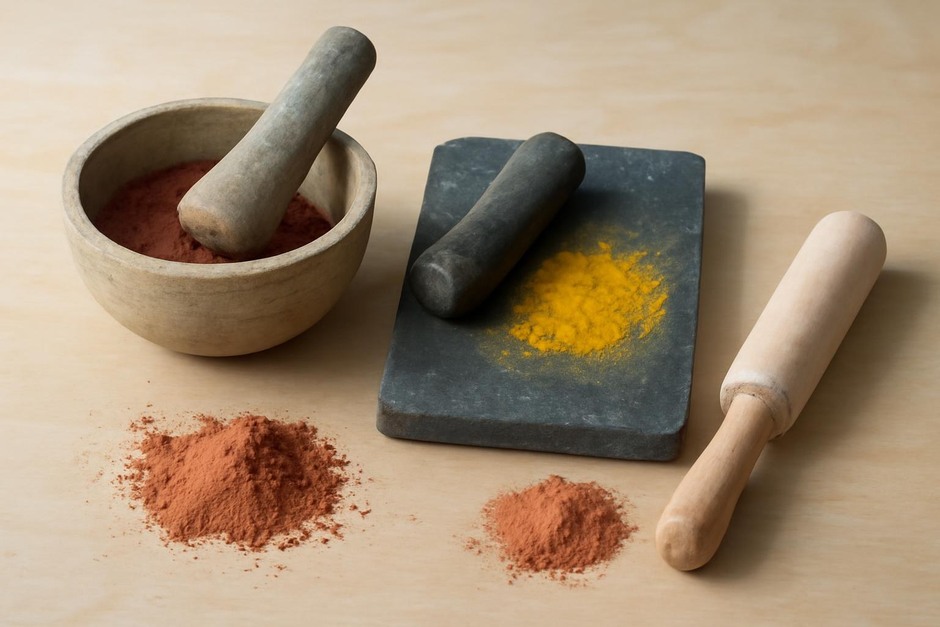
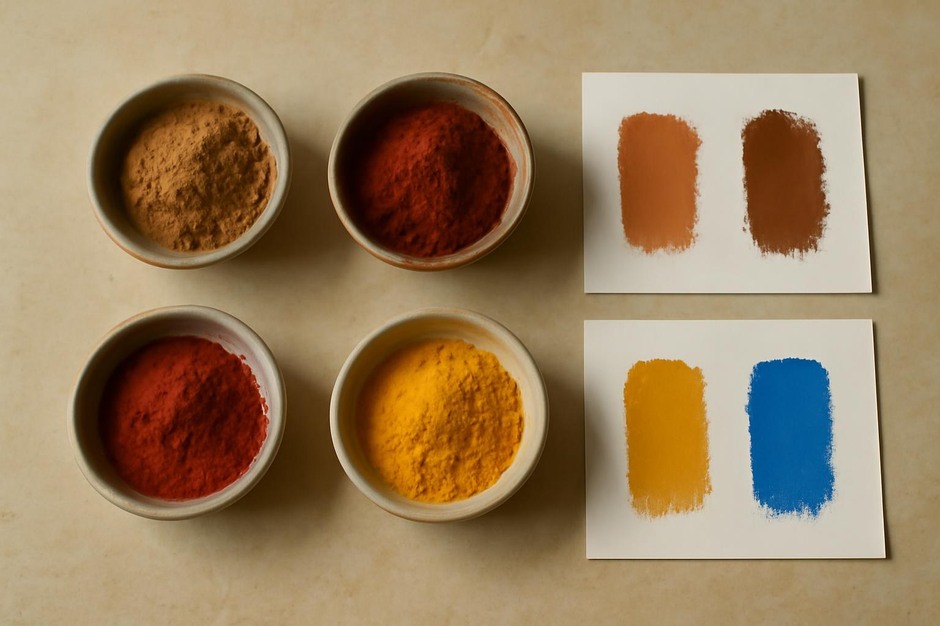
Natural earth pigments and modern synthetic pigments each bring distinct visual and tactile qualities to the studio. Earth pigments, often iron or clay-based, offer muted, warm tones and a granular handling. Synthetic pigments are formulated for higher chroma, consistency, and often finer milling. Comparing them side by side sheds light on how their inherent qualities affect colour mixing, surface texture, and practical use in washes and denser passages.
Visual and tactile differences
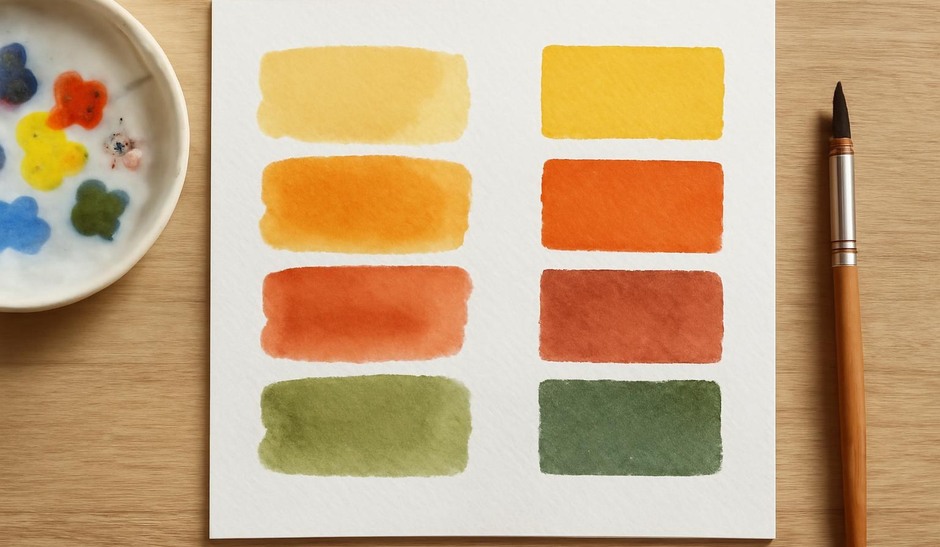
Earth pigments usually contain a range of particle sizes and mineral inclusions that cause subtle variability in tone and granulation. This gives a lived-in, complex surface quality that many studies use to suggest texture and atmospheric depth. Synthetic pigments tend to be more uniform in particle size and often brighter. When applied thinly, synthetics present saturated, predictable fields of colour.
Behaviour in washes
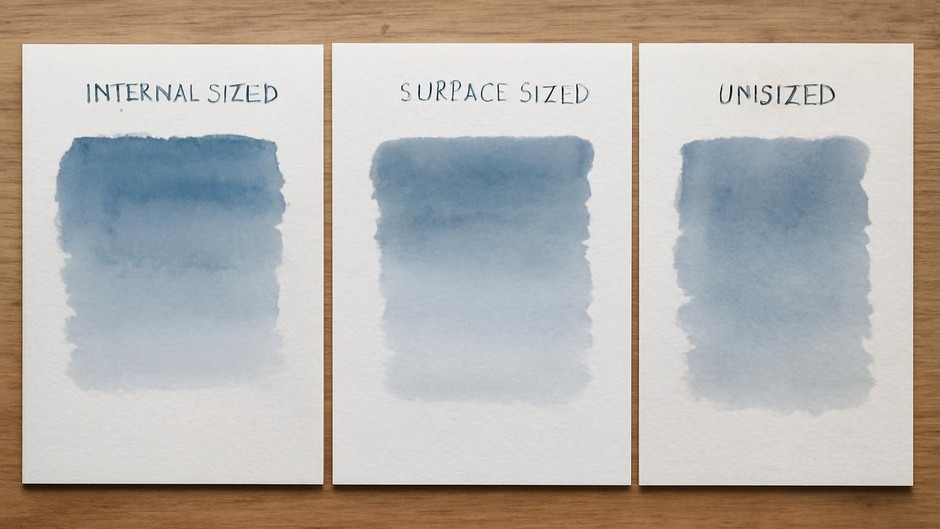
In dilute washes, earth pigments may separate as water carries finer particles further, revealing a granulated texture. This can be desirable for suggesting natural surfaces. Synthetic pigments, especially those engineered for transparency, often suspend more evenly and maintain consistent colour across washes. The choice here influences whether one values granular texture or flat, steady chroma in a wash.
Mixing and chroma
Synthetic pigments provide high chroma and clean mixing when building a limited palette. They can achieve vibrant mixes without quickly muddying when used with appropriate transparent partners. Earth pigments, on the other hand, bring warm undertones and subtle desaturation that can help ground a palette. In combination, they offer balance: synthetics add brightness, earths add restraint.
Edge and drying qualities
Drying surfaces may differ: earth pigments often dry with a softer edge due to particle settling, while synthetics dry with smoother film continuity. When building thick passages, earth pigments can retain a tactile granularity; synthetics produce a smoother surface that may reflect light differently. These differences matter when arranging areas of emphasis in a study.
Practical studio use
- Landscape and texture: earth pigments are valuable for their natural warmth and granulation.
- Colour studies and bright passages: synthetics serve well when saturation and even washes are desired.
- Mixing strategy: use a small set of synthetic colours for chromatic clarity and add earths to modulate and harmonize.
Final observations
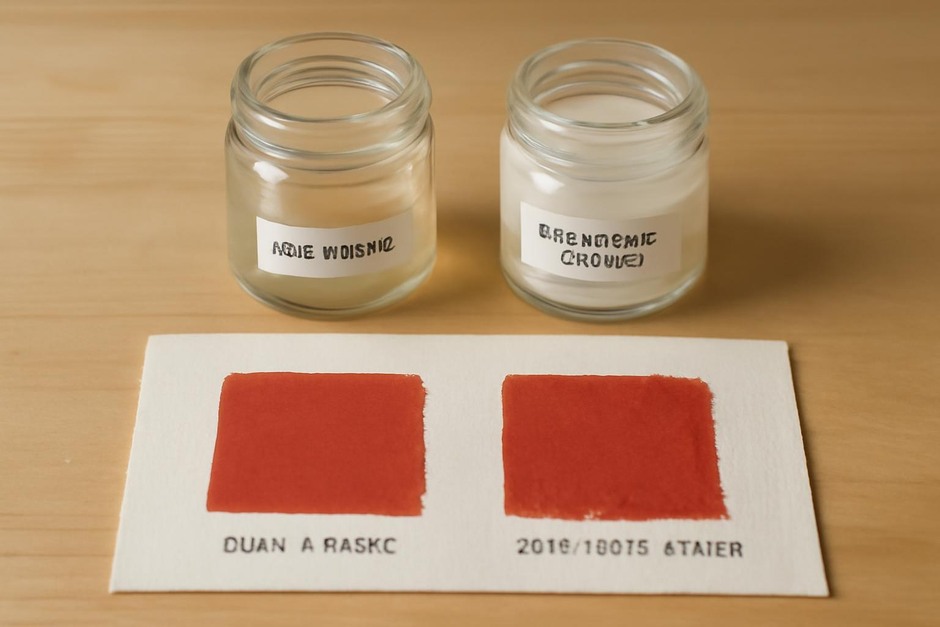
Choosing between earth and synthetic pigments is not a matter of better or worse but of effect. Earth pigments offer subtlety and tactile variation that suit certain observational work. Synthetic pigments supply clarity and predictable mixing for controlled colour experiments. Testing both with your preferred binder and paper will show how their character interacts with your process. Keep samples and notes; over time you build an intuitive sense of which pigments support different intentions in practice.