Textured Paper Choices: Tooth, Deckle, and How They Shape Marks
Texture as a collaborator
Paper texture is an active element in a studio. Tooth, deckle, and surface irregularities guide how pigment rests, how brushes catch, and how edges resolve. Rather than assuming a single preferred surface, comparing papers helps find one suited to a given approach: delicate observation, bold gestural marks, or layered glazing.
Paper types and simple tests
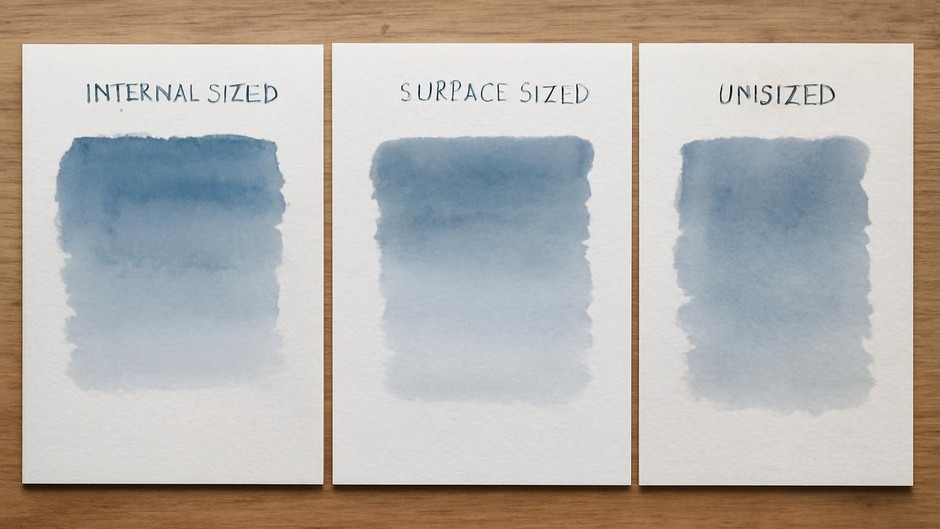
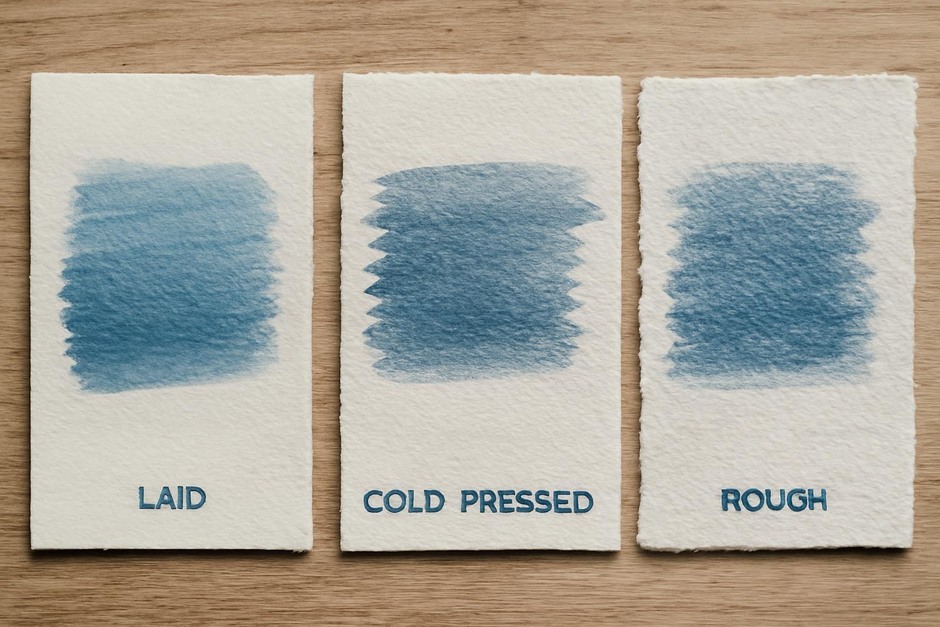
Three common categories make an instructive set: laid (or handmade laid), cold-pressed (medium tooth), and rough (pronounced texture). On each sheet try similar strokes: dry brush, wet wash, hard-edge line, and lift test. Look for pigment retention, granulation, and how detail behaves along deckle or cut edges.
Laid paper
Laid paper shows subtle linear texture from the mould and often has a crisp deckle edge. Its tooth is moderate and directional; brushes may snag slightly along the laid lines, which can produce delicate striations in dry brush work. Laid surfaces are congenial to fine hatch and sensitive washes that reveal paper texture as part of the mark. Observers often find laid paper excellent for small, detailed studies where paper rhythm becomes a visible element.
Cold-pressed paper
Cold-pressed stock, with medium tooth, offers a balanced surface for both washes and controlled dry brush techniques. It holds pigment well without overwhelming detail. The tooth supports lift and reworking while giving enough surface grain to register brush strokes. Cold-pressed is a common studio choice for those who want a versatile sheet for mixed approaches.
Rough paper
Rough paper has pronounced peaks and valleys. Pigment accumulates in low areas, accentuating granulation and texture. Washes often read as richly textured fields, and dry brush catches high points to make energetic strokes. Rough sheets encourage broader gestures and can produce atmospheric landscapes with a minimal number of passes. Detail work is more challenging but can be suggested by using the texture rather than overlaying precise marks.
Deckle edges and composition
Deckle edges frame a study subtly and can influence compositional decisions. A deckled margin suggests an object-like quality to a sheet and can encourage working towards the centre or aligning key elements with the irregular border. Cut edges provide a different visual boundary and can feel more controlled; choose according to whether you want the paper to assert a presence in the composition.
Choosing by intention
- Delicate studies and line work: laid paper supports fine hatch and sensitive observation.
- Versatile practice: cold-pressed is a balanced middle ground for washes and texture.
- Bold, textural passages: rough paper amplifies granulation and painterly gestures.
Let surface texture be an ally rather than an obstacle. Test comparable marks across papers and keep a swatch book that pairs paper types with the brushes, pigments, and binders you use most. Over time, these small experiments build an intuitive map of surface choices for different visual aims.